Defined Rooflines
Distinctive panel profiles can create a clean architectural appearance.

Metal roofing can give a home or building a distinctive finished appearance while providing a practical roofing option for many qualifying Florida properties. The right result, however, depends on more than choosing a color or deciding that “metal lasts longer.” Roof design, slope, exposure, panel configuration, attachment details, flashing and the condition of the existing roof must all be considered.
Rooftecs Contracting, LLC provides metal roof evaluations and straightforward repair or replacement guidance from our Bunnell location. We serve qualifying properties throughout Flagler and Volusia counties, including Palm Coast, Flagler Beach, Ormond Beach, Daytona Beach, Port Orange, DeLand and Deltona.
Tell us whether you are dealing with a leak, damaged panels, fastener concerns, storm-related damage or an aging roof. If you are considering changing from shingles to metal, we can evaluate the property and discuss suitable available options.


Compare the Complete System
Metal roofs can use different profiles and attachment configurations. Understanding the general differences can help you ask better questions, but the category name alone does not determine which system is suitable for your property.
Available systems depend on roof design, project scope, product availability and applicable requirements.
Standing seam commonly describes panels with raised vertical seams and concealed attachment details. Homeowners often consider the clean, uninterrupted appearance, but the proposed system must also account for panel dimensions, edge details, valleys, penetrations, flashing and expected thermal movement.
Visible fasteners pass through the panels into the supporting assembly. Careful installation requires attention to fastener type, placement, driving depth, compatible sealing washers, panel laps and flashing details. On an existing roof, these exposed components may be included in the evaluation.
Additional Designs
Manufacturers may offer different rib patterns or products designed to resemble shingles, shakes or tiles. Availability varies, and individual profiles may have different slope, substrate, attachment and flashing requirements. Rooftecs will discuss products and systems that are available and suitable for the proposed project.
Neither configuration is automatically the right answer for every property. Rooftecs identifies the options that may be considered for the specific roof instead of implying that every profile works everywhere. Compare the proposed complete system—not only the name used to describe the panel.
At-a-Glance Guide
This overview explains broad differences between two common attachment configurations. The specific product, complete assembly and property conditions still determine whether a system is appropriate.
| Consideration | Concealed-Fastener or Standing SeamAttachment generally concealed | Exposed-Fastener PanelsVisible attachment pattern |
|---|---|---|
| Finished appearance | Raised seams with attachment generally concealed from view | Visible panel ribs and exposed fastener pattern |
| Attachment | Depends on the selected concealed-attachment system | Fasteners pass through the panel surface |
| Thermal movement | Must be addressed through the selected panel and attachment design | Must be addressed through panel length, fasteners and system details |
| Maintenance observations | Seams, flashing, trim and penetrations remain important | Exposed fasteners and sealing components are additional visible items to observe |
| Roof suitability | Depends on slope, geometry, substrate and product requirements | Depends on slope, geometry, substrate and product requirements |
| Availability | Varies by product, project and current supply | Varies by product, project and current supply |
There is no universal winner. Neither configuration is automatically the right answer for every property. Compare the proposed complete roofing system—not only the name used to describe the metal panel.
Think Beyond the Panel
A metal roof is an assembly of materials and details working together. The panels receive most of the visual attention, but performance also depends on what supports, attaches, joins and terminates them.
Panels, fasteners, trim, flashing and adjacent materials should be evaluated as parts of one system. Water can enter around an edge, transition or penetration even when the center of a panel appears undamaged.
Review the proposed materials, components, installation details, applicable warranty information and written scope—not only the color or profile of the visible panel.
Appearance Meets System Selection
A metal roof can become one of the most visible exterior features of a home. Color, seam spacing, panel width, rib pattern and finish influence how prominent the roof appears from the street.
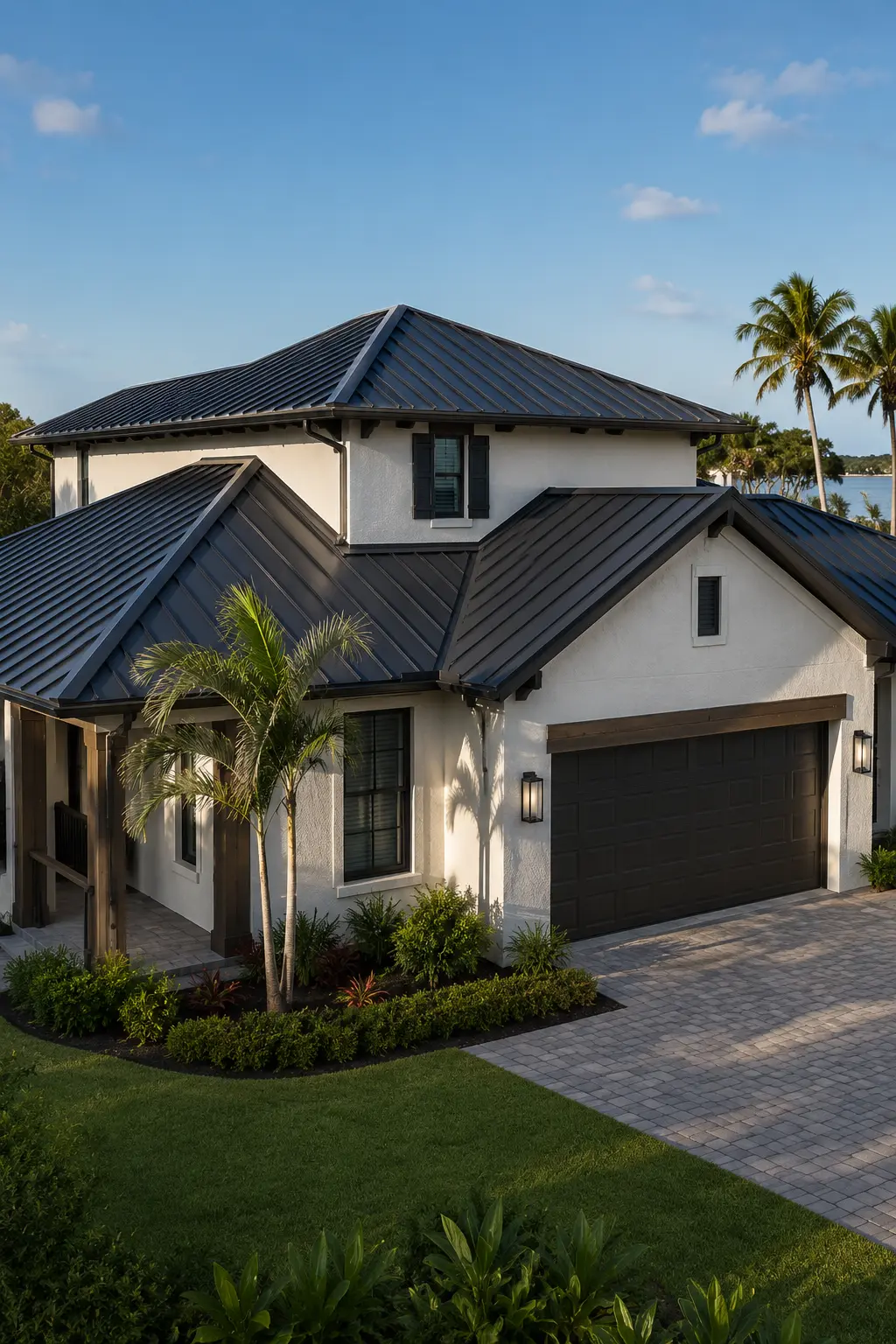
Review physical samples when available. Digital displays can help narrow choices, but screens and lighting can change the appearance of a finish. View samples near the home’s exterior and under different lighting before making a final selection.
Do not choose color from a guaranteed energy-savings claim alone. Energy performance also depends on the specific finish, complete roof assembly, insulation, ventilation, building design and property conditions.
Compare Priorities, Not Just Materials
Metal and architectural shingles can both be appropriate for qualifying Florida homes. The better choice depends on the roof, the proposed complete system and the owner’s priorities.
A distinct architectural appearance with system-specific fabrication, attachment and installation considerations.
A textured roof surface available in varied profiles and color blends for many qualifying Florida homes.
Know What Deserves Attention
Metal roof problems do not always begin as an obvious hole in a panel. Water may enter at a fastener, lap, edge, flashing detail, penetration or transition—and then travel before becoming visible indoors.
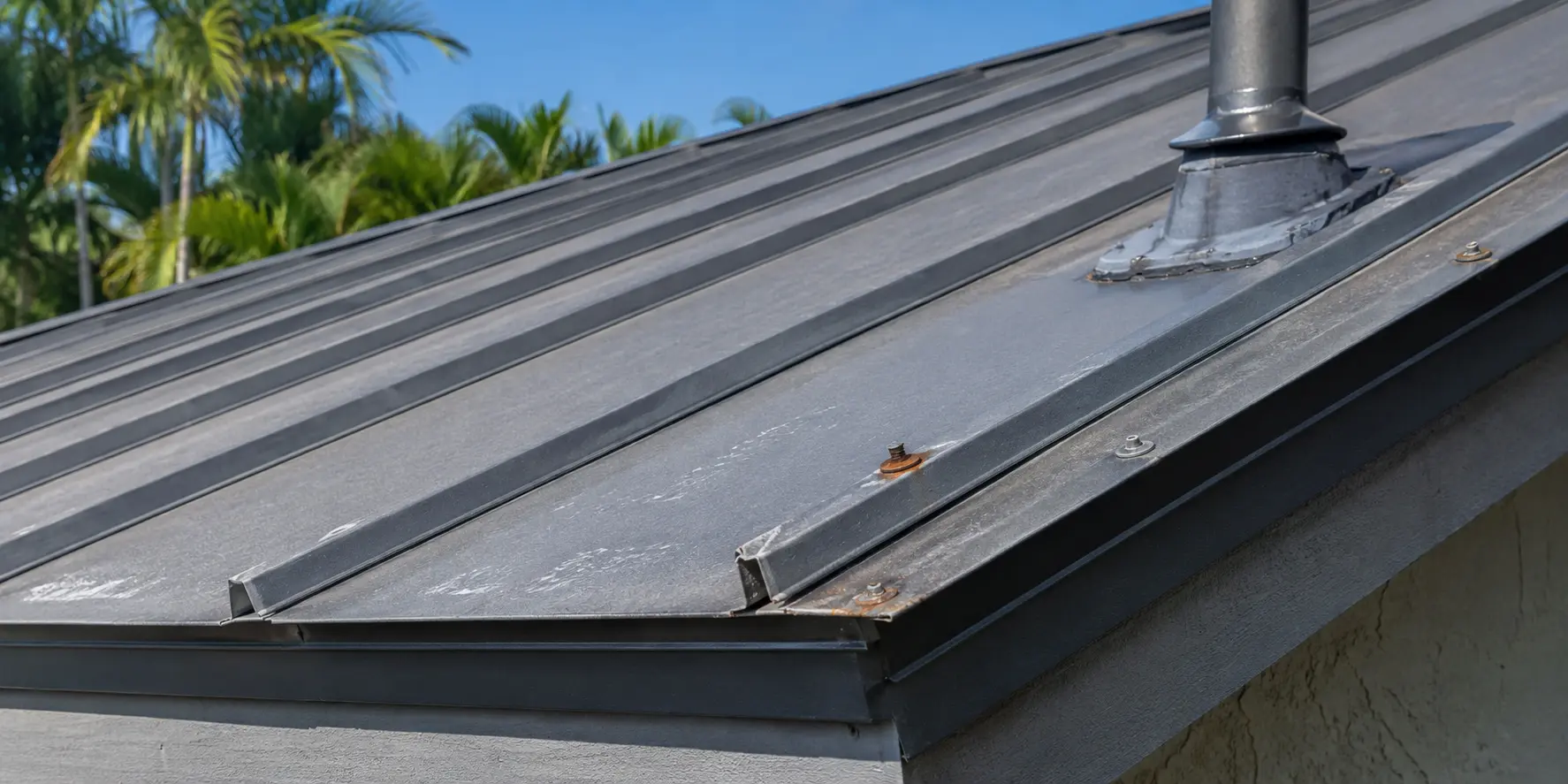
A warning sign does not automatically mean the entire roof needs replacement. The visible symptom may not identify the source or full extent of the problem. Avoid walking on the roof or attempting a repair that could create additional damage or a fall hazard.
Learn About Roof RepairRepairability Is System-Specific
A targeted metal roof repair may be practical when the problem is defined, surrounding materials remain serviceable and compatible components are available.
The repair should address the actual detail or failure mechanism—not simply cover a broad area with coating or sealant.
The source, roof configuration, surrounding condition and availability of compatible materials all influence the answer.
Applying them without understanding the existing metal roof system or its movement details may conceal a condition without providing a dependable repair. The appropriate scope should be based on the actual source and the components involved.
If a defined repair appears practical, Rooftecs will explain the proposed area and scope. If deterioration or installation concerns affect multiple roof areas, replacement may provide a more reasonable long-term direction.
Consider the Pattern, Not One Symptom
Replacing an entire metal roof should not be recommended from one minor symptom alone. It may become the more practical option when the condition is widespread or the existing system can no longer support a reliable targeted repair.
A focused repair may be considered when the source is identifiable, surrounding materials remain serviceable and compatible components are available.
A complete solution may be discussed when deterioration extends across multiple areas or the existing assembly cannot reliably support isolated work.
These findings require property-specific evaluation; none should be treated as a stand-alone diagnosis.
The decision should consider the complete roof. Rooftecs evaluates the practicality of repair, expected appearance, project priorities and the proposed replacement system before discussing the appropriate direction.
Explore Roof Replacement →A Property-Specific Conversion
Changing from asphalt shingles to metal may be possible when the property and selected system support the conversion. The process involves more than fastening metal panels over the existing roof.
The complete path from existing roof removal or treatment through the final metal roofing assembly.
A Clear Six-Step Review
The evaluation process connects your goals and concerns with the conditions of the property, the roofing options that may be suitable and the written scope proposed for approved work.
Provide your name, contact information, property address or city, current roof material if known and a brief description of the concern or project goal. Mention active leaks, damaged panels, visible corrosion, storm impact, previous repairs or interest in changing from shingles to metal.
Rooftecs evaluates accessible visible conditions, including geometry, panel condition, seams or laps, fasteners, flashing, trim, penetrations and the location or distribution of damage. Accessibility, weather and property conditions at the time of the visit may affect what can be evaluated.
We explain whether a defined repair appears practical, whether widespread conditions make replacement a more reasonable option or whether the property can be evaluated for a change from another roofing material.
For a qualifying replacement project, Rooftecs discusses available systems, profiles, attachment configurations, colors and finishes suited to the roof and project priorities. Not every system is offered or appropriate for every property.
Before approving work, review the proposed materials, components, flashing details, project scope, workmanship warranty and applicable manufacturer information. Ask questions about anything you do not understand.
Rooftecs will discuss property access, preparation and scheduling that applies to the approved work. Weather, product availability, fabrication requirements and project conditions may affect timing.
An evaluation is not a one-size-fits-all checklist. What can be reviewed and which options can be discussed depend on accessibility, visible conditions, the existing roof, the selected system and the property itself.
Understand the Separate Forms of Coverage
A metal roofing project may involve a Rooftecs workmanship warranty and one or more manufacturer warranties. These are separate forms of coverage governed by different written terms.
This coverage applies to qualifying installation workmanship as described in the written warranty terms provided for the approved project.
Coverage depends on the selected metal, panel, finish, components and complete system. A material warranty and a finish warranty may address different conditions.
Do not assume an advertised warranty length describes every kind of coverage or every roof component. Rooftecs will review the warranty information associated with the proposed roofing system before approved work begins.
Written terms control coverage. Eligibility, covered conditions, exclusions and claim procedures should be reviewed in the documents issued for the specific project and selected products.
Local Knowledge. Clear Direction.
Choosing a metal roof involves decisions about the existing roof, panel configuration, attachment, details, appearance and budget. Rooftecs helps property owners understand those decisions before approved work begins.
Rooftecs serves qualifying coastal and inland properties throughout Flagler and Volusia counties, bringing local perspective to the roofing concerns found across the area.
Rooftecs Contracting, LLC operates under Florida Roofing Contractor License #CCC1332086.
Verify through Florida DBPR ↗Our experience includes shingle, metal, flat and low-slope systems commonly found throughout Northeast and Central Florida. That broader perspective helps us consider transitions and mixed roof designs.
Qualifying metal roof installations are backed by a 10-year Rooftecs workmanship warranty according to the written project terms. Applicable manufacturer material or finish warranties are separate.
If a defined repair appears practical, we will discuss it. If replacement offers a more dependable direction for widespread or system-level concerns, we will explain the conditions behind that recommendation.
The goal is an informed decision—not a predetermined material choice. Metal roofing should be recommended only when the property, proposed complete system and project priorities support it.
Local Coastal and Inland Service
Rooftecs Contracting, LLC provides metal roof evaluations for qualifying residential and commercial properties throughout communities in Flagler and Volusia counties.
Rooftecs evaluates qualifying metal roofing projects across both coastal and inland communities. Product suitability and project requirements may differ based on the property’s location, roof design and exposure.
Do not see your community listed? Service availability depends on property location, roof type, project requirements and the current schedule. Contact Rooftecs to ask whether service is presently available for your property.
Check Metal Roofing Availability Call (386) 631-5297Straight Answers for Florida Property Owners
Explore common questions about metal roofing systems, repairs, conversions, Florida conditions and warranties. Open any question to read the answer.
Metal roofing may be suitable for many qualifying Florida homes. Suitability depends on roof slope, geometry, deck or substrate conditions, property exposure, selected metal system, attachment method and applicable requirements. Metal roofing is not automatically appropriate for every roof area.
Standing seam commonly uses raised seams and concealed attachment details, while exposed-fastener panels use fasteners that pass through the visible panel surface. The actual differences depend on the selected products. Roof slope, panel design, attachment, flashing, thermal movement, availability and written warranty terms should all be compared.
No contractor should imply that every metal product or profile is suitable or available for every property. Rooftecs reviews the roof, project requirements and currently available systems before discussing specific metal roofing options.
A targeted repair may be possible when damage is defined, surrounding materials remain serviceable and compatible panels or components are available. Repairability depends on panel profile, metal and finish, seam or fastener condition, corrosion, previous repairs and the extent of the problem. Learn more about Rooftecs roof repair evaluations.
Visible fasteners can loosen or appear raised for several reasons, including movement, installation conditions, substrate concerns, deterioration of sealing components or changes within the roof assembly. The surrounding panels, washers, laps and supporting conditions should be evaluated before recommending a repair.
The appropriate response depends on the metal, finish, location, depth and extent of corrosion. A small surface condition and widespread deterioration do not call for the same solution. Coating over corrosion without evaluating the material and source may not provide a dependable repair.
Yes. Water can enter at fasteners, seams, laps, flashing, edges, valleys, penetrations or transitions even when the central portion of a panel looks intact. Water may also travel before becoming visible inside the property, which is why the surrounding roof details should be evaluated.
No. Minimum slope and installation requirements vary by metal roofing product and system. Roof geometry, drainage and manufacturer instructions must be considered. Flat or low-slope areas may require a different roofing system.
A shingle-to-metal conversion may be possible when the roof design, slope, structure, deck condition, attachment requirements and applicable rules support the selected metal system. Rooftecs can evaluate the property and explain suitable available options. You can also review the broader roof replacement planning process.
An overlay should not be assumed to be appropriate for every home. The existing roof, number and type of roof layers, deck condition, selected metal system, attachment, ventilation, applicable requirements and manufacturer instructions must be reviewed before an overlay can be considered.
Consider the home’s architecture, stucco or siding, masonry, trim, roof visibility, panel profile and how the finish appears in sun and shade. Review physical samples when available and confirm homeowners association or community requirements before making a final selection.
Perceived sound depends on the complete roof and building assembly, including the supporting deck, underlayment, insulation, attic space, ceilings and selected metal system. A metal roof installed over a solid residential roof assembly should not be compared directly with an uninsulated open structure.
Yes. The Rooftecs 10-year workmanship warranty applies to qualifying installation workmanship according to its written terms. Manufacturer material or finish coverage is separate and governed by the selected product’s written coverage, exclusions, limitations and owner requirements.
Rooftecs is based in Bunnell and serves Bunnell, Palm Coast, Flagler Beach, Ormond Beach, Daytona Beach, Port Orange, DeLand and Deltona. Call (386) 631-5297 to confirm current metal roofing availability for your property.
Tell Rooftecs about the property, existing roof material and the concern or project goal.
Talk With a Local Roofing Contractor
You do not need to select a panel profile, attachment method, color or finish before contacting Rooftecs. Begin by telling us about the property, the current roof and any leaks, visible damage or replacement goals.
Rooftecs will evaluate accessible visible conditions, discuss whether repair or replacement appears appropriate and help you compare available metal roofing options suited to the roof, desired appearance, budget and long-term plans.
Rooftecs Contracting, LLC
Local roofing services for shingle, metal and flat roofs throughout Flagler and Volusia counties.
Service Areas:
Contact:
102 E Magnolia St, Bunnell, FL 32110
Phone: (386) 631-5297
Email: [email protected]
Florida License #CCC1332086

